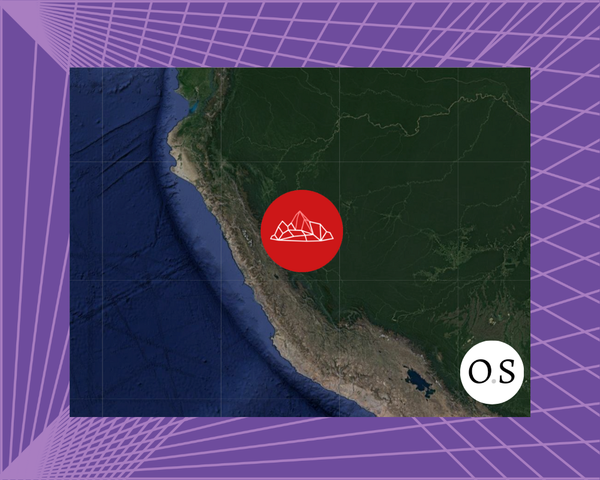
Building Your Product The National Georeferenced Data Platform powered by Obelisk Developing innovative software can be challenging, and even experienced software agencies can struggle to estimate the time and resources needed to complete a project. Working with government entities can add additional obstacles, often requiring tailored solutions that accommodate multiple operating approaches and needs of various users, without altering people'
Haskell Obsidian Systems at MuniHac Come and join MuniHac this year! Ryan Trinkle will present the session 'React + Reflex: Harmonizing TypeScript and Haskell with Functional Reactive Programming' Obsidian Systems specializes in fullstack and web products, offering out-of-the-box solutions to clients. During MuniHac, Ryan Trinkle from our company will present how
Haskell Haskell: How a Lazy Language Was Put to Work (Part Three) >Welcome to the third part of our series on the history of the Haskell language. To ensure a truly comprehensive understanding, we strongly encourage you to explore the previous chapters of this enthralling series: Part 1: The Outline - Beginnings (1990 - 2000) Part 2: Haskell and the Rise of Functional
Haskell Why Organizations Pick Haskell and Why You Should Care Haskell: Like a Steak in a Hot Dog 1 Since 1990 and beyond Haskell attracts students, researchers, and passionate engineers, thanks to its maturity and vibrant community who are deeply involved in various opensource projects and its gift economy approach. It welcomes those new to functional programming or those who
Business How Obsidian Systems Builds Products For almost a decade, we’ve shaped our unique modus operandi to deliver great products to our customers with shorter timelines and smaller budgets, and we guarantee to lead an idea from plan to prototype in only ten weeks. This post is an overview of our workflow. How it started
Haskell Seven GUIs in reflex-vty, Part 2: The Temperature Converter 7GUIs defines seven tasks that represent typical challenges in GUI programming -- 7GUIs: A GUI Programming Benchmark 7GUIs is a set of 7 typical GUI programming tasks of varying levels of complexity. We're going to implement the 7GUIs in Haskell using the reflex functional reactive programming framework. The structure
Haskell Building a Haskell CRUD stack with Obelisk for PowerZonePack There isn't an abundance online of writing about successful, reliable, and reproducible CRUD stacks for Haskell developers. We wanted to add to the amount of explanation available, using by example the practical context of our work with PowerZonePack, or PZP. PZP is a group of Peloton users who
Haskell Haskell: How a Lazy Language Was Put to Work (Part Two) Haskell and the rise of functional programming 2000 - 2015 A major pro-Haskell change in culture has been the rise of functional programming (FP). While much of FP’s contemporary popularity has to do with its value to FinTech, it wasn't until the mid-to-late 2010s that
Haskell Haskell: How a Lazy Language Was Put to Work (Part One) This is the first in a series of posts that aims to contextualize Haskell's reputation. As code, Haskell makes it possible to deeply understand what effects a program will and won’t have: immutable constants replace variables; functions do nothing but produce their result. As a topic of
Haskell Seven GUIs in reflex-vty, Part 1: The Counter 7GUIs defines seven tasks that represent typical challenges in GUI programming -- 7GUIs: A GUI Programming Benchmark 7GUIS is a set of 7 typical GUI programming tasks of varying levels of complexity. We're going to implement the 7GUIs in Haskell using the reflex functional reactive programming framework. The code
Nix Setting up WeeChat and Glowing Bear on NixOS So much conversation in the Haskell and Nix ecosystems happens on IRC. One of the disadvantages of IRC is that you can't log in ("identify") as the same user on multiple machines. This is especially annoying when switching between mobile and desktop. Some proprietary services, like